


 nship with God is similar to our relationship with others in that all relationships require faith, and I can never and will never fully know any other person. This is because we are incapable of fully knowing others because we cannot experience all they experience nor enter into their minds to know what their thoughts and emotions are. Proverbs 14:10 says, "The heart knows its own bitterness, and a stranger does not share its joy." We are even incapable of knowing our own heart fully. Jeremiah 17:9 says that the human heart is wicked and deceptive, and this verse asks concerning the human heart, "Who can know it?" In other words, the human heart is such that it seeks to hide the depth of its wickedness and gloss over it, deceiving even its owner.
  impossible! But nonetheless, even as we can have meaningful relationships with those around us that we have grown to trust because of our knowledge of them and of their character, so God has revealed enough about Himself through His creation (Romans 1:18-21), through His written word, the Bible (2 Timothy 3:16-17; 2 Peter 1:16-21), and through His Son (John 14:9) that we can enter into a meaningful relationship with Him. But this is only possible when the barrier of one's sin has been removed by coming to trust in Christ's person and work on the cross as payment for one's sin. This is necessary because, as it is impossible for both light and darkness to dwell together, so it is impossible for a holy God to have fellowship with sinful mankind unless our sin has been paid for and removed. Jesus Christ, the sinless Son of God, died on the cross to take our punishment and change us so that the one who believes on Him can become a child of God and live eternally in His presence (John 1:12; 2 Corinthians 5:21; 2 Peter 3:18; Romans 3:10-26).
 ng to release the Israelites from their slavery. God then opened up the Red Sea, enabling the approximately two million Israelites to cross over on dry ground. Then, as the Egyptian army sought to pursue them through the same opening, He defeated this enemy by bringing the waters upon them. Later, in the wilderness, God fed them miraculously with manna, guided them in the day by a pillar of cloud and by night by a pillar of fire, visible representations of His presence with them. He also obtained water for this great number of people in the wilderness through miraculous means, including causing water to flow from a rock as Moses struck it with his rod.
 g against God's loving reign because it craves its own sinful self-rule.God has revealed enough of His nature for us to be able to trust Him. He has declared and shown through the events of history, in the workings of nature, and through the life of His only-begotten Son, Jesus Christ, that He is all-powerful, all-knowing, all-wise, all-loving, all-holy, unchanging, and eternal. And in that revelation, He has shown that He is worthy to be trusted. But as with the Israelites in the wilderness, the choice is ours as to whether or not we will trust Him.
 Interesting Facts About Humans...
1.Women blink twice as many times as men do.
2. Intelligent people have more zinc and copper in their hair.
3. We are about 1 cm taller in the morning than in the evening. Layers of cartilage in the joints gets compressed during the day.
4. There are approx. 550 hairs in the eyebrow.
5. If left alone, 70% of birthmarks gradually fade away.Today's Interesting Facts
6. Babies are born without kneecaps. They appear when the child is 2-6 years of age.
7. Your body is creating and killing 15 million red blood cells per second!
8. The average human produces 10,000 gallons of saliva in a lifetime.
9. Thinking about your muscles can make you stronger.
10. After eating too much, your hearing is less sharp.
 One Sunday morning, the pastor noticed little Alex was staring up at the large plaque that hung in the foyer of the church. The plaque was covered with names, and small American flags were mounted on either side of it. The seven-year-old had been staring at the plaque for some time, so the pastor walked up, stood beside him and said quietly, "Good morning, Alex."
 Look around you and you'll witness examples of ancient Egyptian inventions.
 of the Kings there is ample testimony of the ancient Egyptians ability to dig complex structures.
 Don Moen (born June 29, 1950 in Minneapolis, Minnesota) is an American singer-songwriter, pastor, and producer of Christian worship music.
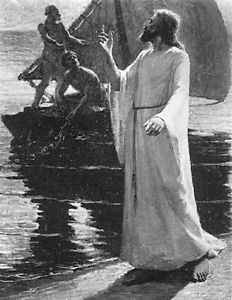 Jesus of Nazareth (7–2 BC/BCE – 26–36 AD/CE), also known as Jesus Christ, is the central figure of Christianity and is revered by most Christian churches as the Son of God and the incarnation of God. Islam considers Jesus a prophet, and he is an important figure in several other religions. Judaism rejects the claim that Jesus is the Messiah foretold in the Hebrew Bible
 ,[and contemporary scholars generally view the genealogies as theological constructs.[ More specifically, some have suggested that Matthew wants to underscore birth of a messianic child of royal lineage (mentioning Solomon) whereas Luke's genealogy is priestly (mentioning Levi). Both accounts trace his line back to King David and from there to Abraham. These lists are identical between Abraham and David, but they differ between David and Joseph. Matthew starts with Solomon and proceeds through the kings of Judah to the last king, Jeconiah. After Jeconiah, the line of kings terminated when Babylon conquered Judah. Thus, Matthew shows Jesus as a descendant of the kings of Israel. Luke's genealogy is longer than Matthew's; it goes back to Adam and provides more names between David and Jesus.
 Jesus' most famous teachings come from the Sermon on the Mount, which contains the Beatitudes and the Lord's Prayer. It is one of five collections of teachings in Matthew.
%202005.jpg) hieves, and his cross states that he is being executed for aspiring to be the king of the Jews. He begins to recite Psalm 22, "My God, my God, why hast thou forsaken me." He utters a loud cry and dies. According to all four Gospels, Jesus died before late afternoon at Calvary, which was also called Golgotha. In Luke, Jesus faces his crucifixion stolidly. He asks God to forgive those who are crucifying him, possibly the Romans and possibly the Jews. One of the thieves states that Jesus has done nothing wrong and asks Jesus to remember him in the Kingdom, and Jesus replies that the thief will be with him in Paradise. The Synoptic Gospels tell of the darkening of the sky from twelve until three that afternoon; Matthew also mentions an earthquake (Matthew 27:51), the earth breaking open and a number of righteous dead people rising out of the grave and going into Jerusalem. John omits the natural phenomena accompanying Jesus' death. The tearing of the temple parokhet, upon the death of Jesus, is referenced by Matthew, Mark and Luke.
hieves, and his cross states that he is being executed for aspiring to be the king of the Jews. He begins to recite Psalm 22, "My God, my God, why hast thou forsaken me." He utters a loud cry and dies. According to all four Gospels, Jesus died before late afternoon at Calvary, which was also called Golgotha. In Luke, Jesus faces his crucifixion stolidly. He asks God to forgive those who are crucifying him, possibly the Romans and possibly the Jews. One of the thieves states that Jesus has done nothing wrong and asks Jesus to remember him in the Kingdom, and Jesus replies that the thief will be with him in Paradise. The Synoptic Gospels tell of the darkening of the sky from twelve until three that afternoon; Matthew also mentions an earthquake (Matthew 27:51), the earth breaking open and a number of righteous dead people rising out of the grave and going into Jerusalem. John omits the natural phenomena accompanying Jesus' death. The tearing of the temple parokhet, upon the death of Jesus, is referenced by Matthew, Mark and Luke.
 e Gospels all record appearances by Jesus, including an appearance to the eleven and In Mark and Luke, Jesus ascends to the heavens after these appearances. In Luke, Jesus ascends on Easter Sunday evening when he is with his disciples. In Mark, Jesus' Ascension to heaven, where he sits at God's right hand, is said to have taken place but not described as a visible event and John implies the scension without describing it.
 A middle-aged woman has a heart attack and is taken to the hospital. While on the operating table she has a near death experience.
 erian Səḏôm, Greek Σόδομα) and Gomorrah (Arabic: عمورة ʿAmūrah, Hebrew: עֲמוֹרָה, Standard ʿAmora Tiberian Ġəmôrāh / ʿĂmôrāh, Greek Γόμορρα) were two cities in the Bible which were destroyed by God.
 cause of its wickedness. Abraham pleads with God not to destroy Sodom, and God agrees that he would not destroy the city if there were 50 righteous people in it, then 45, then 30, then 20, or even ten righteous people. The Lord's two angels found only four righteous people living in Sodom, including Abraham's nephew Lot and his wife and two youngest daughters. Consequently, God destroyed the city.
 Reverend Billy Graham tells of a time early in his ministry when he arrived in a small town to preach a sermon. Wanting to mail a letter, he asked a young boy where the post office was. When the boy had told him, Dr. Graham thanked him and said, "If you'll come to the Baptist Church this evening, you can hear me telling everyone how to get to heaven."
 If “free will” can mean that God gives humans the opportunity to make choices that genuinely affect their destiny, then, yes, human beings do have a free will. The world’s sin status is directly associated with choices made by Adam and Eve. All accounts of the fall of mankind indicate it was as the result of a wrong choice. From that point on, individuals have had the opportunity to choose to follow God or to experience the consequences for not making that choice.Even in light of God’s choosing Abraham and his descendants, God held individuals accountable for their choices. In the Old Testament, individuals outside of the chosen nation (Israel) were able to choose to believe and follow God (examples: Gentiles that left with the Israelites at the Exodus, Ruth, and Rahab). Therefore, He who chooses (elects) also allows individuals to choose. The Book of Romans is famous for explaining salvation and the sovereignty of God. It uses words like chose, predestined, elect, etc., yet it also holds people accountable for not choosing.In the section where Romans discusses the sinful depravity of humans, God bluntly states that those outside of salvation are without excuse--“no defense.” This is specifically in light of the rejection of general revelation, showing His existence through His creation (Romans 1:20-21).In other passages we learn that (1) individuals are expected to choose to believe (John 3:16; Romans 10:11; etc). (2) Individuals have a choice to be foolish or wise (Matthew 7:26). (3) The Scriptures are given to provide instruction for salvation – obviously to be chosen or rejected (2 Timothy 3:15; John 20:30-31). (4) Jesus established the choosing of obedience as a sign of our love for Him (John 14:21).It is God’s will that none should perish (2 Peter 3:9), therefore, it must be someone else’s choice that separates individuals from God. God says we will reap what we sow – we can choose to reap differently (Galatians 6:7-8).The multitudes of directives given by God assume that the hearers can make a choice to obey or disobey. It seems logical that God could only hold us accountable if we indeed have free will to choose. Therefore, a just God would not declare expectations on those who are not free to choose. It would be unjust for God to then punish those who had no choice in their actions. God, in His absolute sovereignty, created the human race with ability to make genuine and free choices.
 out onto her front porch and shouts "Praise the Lord!".
 The resurrection of Jesus is important for several reasons. First, it witnesses to the immense power of God Himself. To believe in the resurrection is to believe in God. If God exists, and if He created the universe and has power over it, He has power to raise the dead. If He does not have such power, He is not a God worthy of our faith and worship. Only He who created life can resurrect it after death, only He can reverse the hideousness that is death itself, and only He can remove the sting that is death and the victory that is the grave’s. In resurrecting Jesus from the grave, God reminds us of His absolute sovereignty over life and death.Second, the resurrection of Jesus is a testimony to the resurrection of human beings, which is a basic tenet of the Christian faith. Unlike all other religions, Christianity alone possesses a founder who transcends death and who promises that His followers will do the same. All other (false) religions were founded by men and prophets whose end was the grave. As Christians, we take comfort in the fact that our God became man, died for our sins, was killed, and was resurrected the third day. The grave could not hold Him. He lives and He sits today at the right hand of God the Father in heaven. The living church has a living Head.In 1 Corinthians 15, Paul explains in detail the importance of the resurrection of Christ. Some in Corinth did not believe in the resurrection of the dead, and in this chapter Paul gives six disastrous consequences if there were no resurrection: 1) preaching Christ would be senseless (v. 14); 2) faith in Christ would be useless (v. 14); 3) all the witnesses and preachers of the resurrection would be liars (v. 15); 4) no one would be redeemed from sin (v. 17); 5) all former believers would have perished (v.18); and 6) Christians would be the most pitiable
  people on the earth (v. 19). But Christ indeed has risen from the dead and “has become the firstfruits of those who have fallen sleep” (v. 20), assuring that we will follow Him in resurrection.The inspired Word of God guarantees the believer's resurrection at the coming of Jesus Christ for His Body (the Church) at the Rapture. Such hope and assurance issues in a great song of triumph as Paul writes in 1 Corinthians 15:55, "O death, where is thy sting? O grave where is thy victory?" How do these concluding verses relate to the importance of the Resurrection? Paul answers, "...you know that your labor is not in vain" (v. 58). He reminds us that because we know we will be resurrected to new life, we can suffer persecution and danger for Christ’s sake (vv. 29-31), just as He did, and just as the thousands of martyrs through history who gladly traded their earthly lives for everlasting life via the resurrection.The Resurrection is the triumphant and glorious victory for every believer in Jesus Christ who died, was buried, and rose the third day according to the Scripture. And, He is coming again! The dead in Christ will be raised up, and those who remain and are alive at His coming will be changed and receive new, glorified bodies (1 Thessalonians 4:13-18). Why is the resurrection of Jesus Christ important? It demonstrated that God accepted Jesus’ sacrifice on our behalf. It proves that God has the power to raise us from the dead. It guarantees that those who believe in Christ will not remain dead, but will be resurrected unto eternal life. That is our blessed hope!Recommended
 -8x6.png) Keys are a symbol of control. Keys keep people in or out. If they do not have a key to a lock, they cannot enter or exit. Keys grant the holder access to interiors and their contents, and in ancient times the wearing of large keys was a mark of status in the community. In the New Testament, the word "Hades" has a twofold usage: in some cases it denotes the place of all the departed dead (the grave - Acts 2:27,31); in others, it refers to the place of the departed wicked (Hell - Luke 16:23; Revelation 20:13-14). Since Christ alone has conquered death and has Himself come out of grave, He alone can determine who will enter death and Hades and who will come out. He has the "keys." He has authority over death and the place of the dead.Satan has never possessed these "keys." Satan has never had power to determ
Keys are a symbol of control. Keys keep people in or out. If they do not have a key to a lock, they cannot enter or exit. Keys grant the holder access to interiors and their contents, and in ancient times the wearing of large keys was a mark of status in the community. In the New Testament, the word "Hades" has a twofold usage: in some cases it denotes the place of all the departed dead (the grave - Acts 2:27,31); in others, it refers to the place of the departed wicked (Hell - Luke 16:23; Revelation 20:13-14). Since Christ alone has conquered death and has Himself come out of grave, He alone can determine who will enter death and Hades and who will come out. He has the "keys." He has authority over death and the place of the dead.Satan has never possessed these "keys." Satan has never had power to determ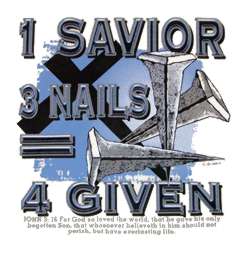 ine who goes to Heaven (the Kingdom) and who goes to Hell. Jesus did not have to fight Satan for the keys because the keys were never in Satan's possession. God and God alone has power over death and Hell (Revelation 1:18). Jesus did not have to fight Satan for anything because Jesus' death on the cross was His ultimate victory. Colossians 2:15 tells us, "...and having disarmed the powers and authorities, He made a public spectacle of them, triumphing over them by the cross."For the Christian, there is no need to fear death and hell. Christ is in control of both, and the one who has faith in Christ will never enter hell. But it must be remembered, ONLY Christ has the keys to the Kingdom. This is why Jesus told us He is the Way, the Truth, and the Life and that NO ONE can come to the Father except by Him (John 14:6).
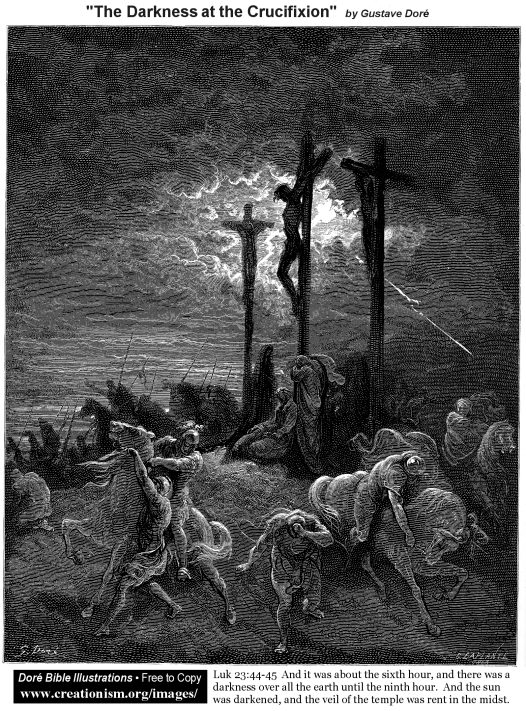 The phrase “blood of Christ” is used several times in the New Testament and is the expression of the sacrificial death and full atoning work of Jesus on our behalf. References to the Savior’s blood include the reality that He literally bled on the cross, but more significantly that He bled and died for sinners. The blood of Christ has the power to atone for an infinite number of sins committed by an infinite number of people throughout the ages, and all whose faith rests in that blood will be saved.The reality of the blood of Christ as the means of atonement for sin has its origin in the Mosaic Law. Once a year, the priest was to make an offering of the blood of animals on the altar of the temple for the sins of the people. “In fact, the law requires that nearly everything be cleansed with blood, and without the shedding of blood there is no forgiveness” (Hebrews 9:22). But this was a blood offering that was limited in its effectiveness, which is why it had to be offered again and again. This was a foreshadowing of the “once for all” sacrifice which Jesus offered on the cross (Hebrews 7:27). Once that sacrifice was made, there was no longer a need for the blood of bulls and goats. The blood of Christ is the basis of the New Covenant. On the night before He went to the cross, Jesus offered the cup of wine to His disciples and said, "This cup is the new covenant in my blood, which is poured out for you” (Luke 22:20). The pouring of the wine in the cup symbolized the blood of Christ which would be poured out for all who would ever believe in Him. When He shed His blood on the cross, He did away with the Old Covenant requirement for the continual sacrifices of animals. Their blood was not sufficient to cover the sins of the p
 eople, except on a temporary basis, because sin against a holy and infinite God requires a holy and infinite sacrifice. “But those sacrifices are an annual reminder of sins, because it is impossible for the blood of bulls and goats to take away sins” (Hebrews 10:3). While the blood of bulls and goats were a “reminder” of sin, “the precious blood of Christ, a lamb without blemish or defect” (1 Peter 1:19) paid in full the debt of sin we owe to God, and we need no further sacrifices for sin. Jesus said, “It is finished” as He was dying, and He meant just that—the entire work of redemption was completed forever, “having obtained eternal redemption” for us (Hebrews 9:12).Not only does the blood of Christ redeem believers from sin and eternal punishment, but “His blood will make our consciences pure from useless acts so we may serve the living God” (Hebrews 9:14 NCV). This means that not only are we now free from having to offer sacrifices which are “useless” to obtain salvation, but we are free from having to rely on worthless and unproductive works of the flesh to please God. Because the blood of Christ has redeemed us, we are now new creations in Christ (2 Corinthians 5:17), and by His blood we are freed from sin to serve the living God, to glorify Him, and to enjoy Him forever.Recommended
 sing. Thousands have been left without shelter and have lost everything they own. Such is the current state of affairs following the most serious forest fires that Australia has ever seen. New Apostolic members have once again escaped with nothing more than a scare.
 A nun who works for a local home health care agency was out making her rounds when she ran out of gas. As luck would have it there was a station just down the street. She walked to the station to borrow a can with enough gas to start the car and drive to the station for a fill up.
The beginnings of the church of Christ were very humble, but out of it developed a worldwide church. This achievement cannot be ascribed to a few believing individuals, but came about thanks to the goodness and grace of God. Luke writes that the congregation developed from a few disciples, both men and women, into a steadily growing congregation—all owing to the activity of the Holy Spirit (cf. Acts 2: 42-47). The Lord Jesus once told His disciples: “You did not choose Me, but I chose you” (cf. John15: 16). This means that everything emanates from Him! This was not only how it was at that time, but is still the case today. Without His blessing and without His help, we could do nothing. But with His blessing and help everything is possible.
A special day of blessing, for instance, is Confirmation, when young sisters and brothers vow to remain faithful to God, and He responds by blessing them.
How do we show our gratitude for all this?” It is all very well to say: “Thank you, Lord.” But is it enough?
Parents teach their children to be thankful, and they are indeed happy when children express their gratitude. But parents will often also say: “Well, if you are so grateful, why don’t you show me!” Thankfulness is best demonstrated by our conduct. Let us do the same where God is concerned, and let us demonstrate by our conduct that we are grateful.
We can do this by offering and bringing sacrifices. Those who are truly thankful to the Lord will also bring their offerings. I am not only thinking about monetary offerings here, which we gladly bring to the Lord, but also the sacrifice of our time.
Those who are grateful will engage their gifts in the work of God. They will help along and not simply stand at the sidelines. They will do their part to create an environment in the congregation in which all feel comfortable and at ease. Those who are grateful will also profess this outwardly. They will speak of all the good things the Lord has done for them: that He has led and guided them and that they have experienced many miracles of His grace. In general however, people have a different attitude: they often talk about negative things, or about the faults of the one or the other. Often they even complain about their circumstances. But all this will do nothing to change these situations. How beautiful it is on the other hand when people talk about their gratefulness! Let us therefore be thankful to the Lord with all our hearts and also demonstrate our gratitude.
(From a divine service by the Chief Apostle)


